Industry Analysis
China's Integrated Lunar Pipeline: Why On-Orbit Manufacturing Is a Strategic Race
China tested its first metal 3D print in space on January 12. The same month, the Deep Space Exploration Laboratory in Hefei demonstrated a solar-concentrator printer that melts lunar regolith simulant above 1,300 degrees Celsius using zero Earth-sourced additives. Sintered regolith bricks from that program are already aboard Tiangong, where the first set returned after a year of space exposure in good condition.
Donghua University built what it describes as the world's first equipment for converting lunar soil into fiber in a vacuum. The system heats regolith to 1,500 Celsius and draws continuous fibers at 10 to 20 microns in diameter, which feed directly into 3D printers to produce structural composites on site. Huazhong University has designed a four-type robotic swarm for autonomous lunar construction: survey bots, transport bots, large 3D printers, and dexterous assembly bots, with a target deployment of Chang'e-8 in 2028.
China National Nuclear Corporation published a peer-reviewed reactor design for the lunar surface. Forty kilowatts electric, sustained for over a decade, using 18.5 kilograms of uranium-235. That is roughly 75 percent less fuel than NASA's fission surface power design requires. Operational target: 2035.
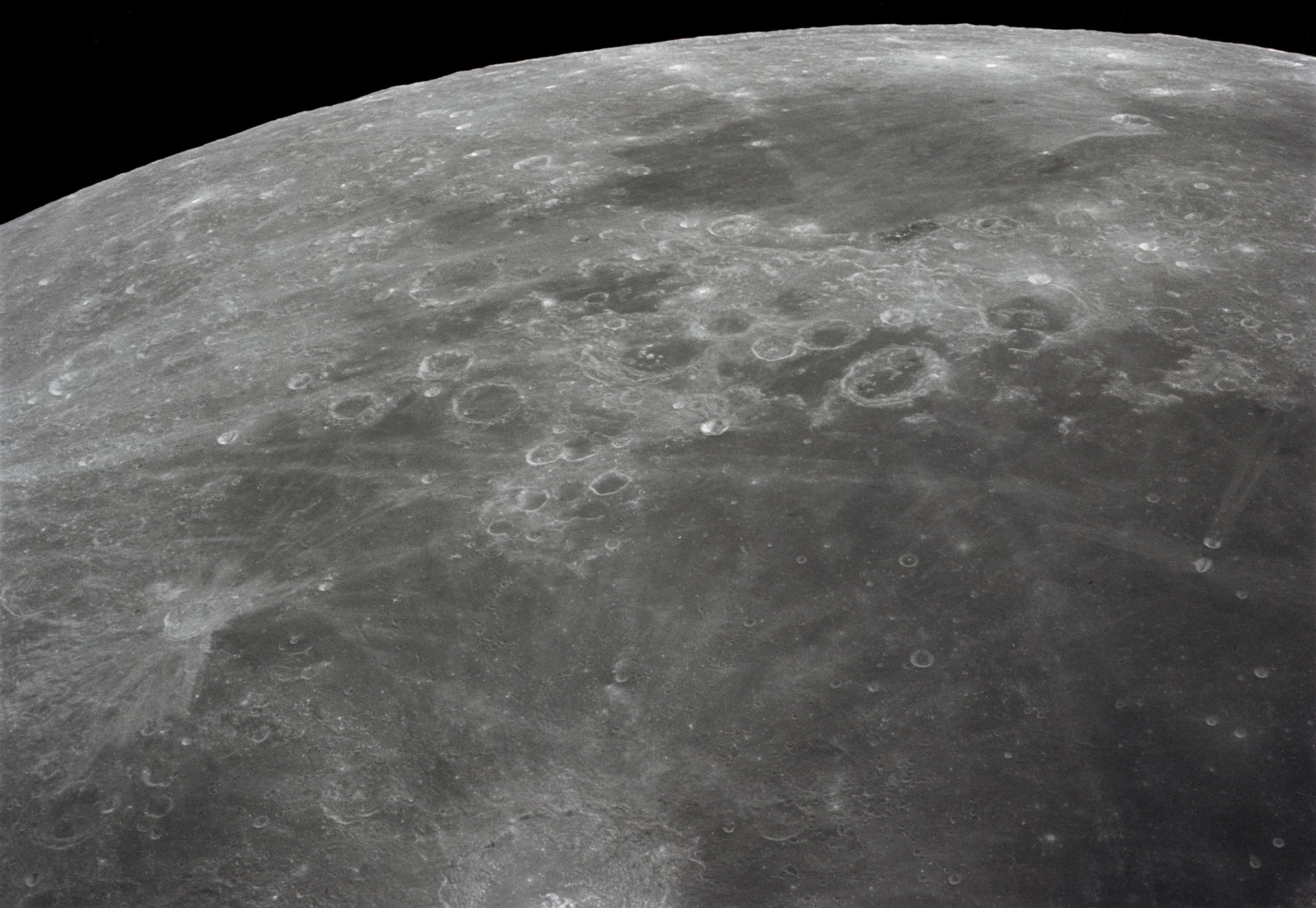
Apply those programs to the timeline. Chang'e-7 launches in August 2026 to prospect for water ice at Shackleton Crater. Chang'e-8 follows in 2028 to test regolith 3D printing and robotic construction on the surface. Basic lunar station by 2035. Meanwhile, aboard Tiangong, the Shenzhou-19 crew completed the world's first artificial photosynthesis in space, converting CO2 and water into oxygen and ethylene at room temperature: a path to breathable air and hydrocarbon propellant from lunar water ice at a fraction of conventional electrolysis costs. In geostationary orbit, China's SJ-21 and SJ-25 satellites completed what tracking firms assessed as the first autonomous docking and refueling at GEO altitude, transferring approximately 142 kilograms of hydrazine.
The United States has an equally serious pipeline. Artemis II sends four astronauts around the Moon for the first time in 53 years. U.S. military launches four on-orbit servicing missions to GEO this year. Northrop Grumman is demonstrating robotic arms on live satellites. Astroscale is refueling a Space Force satellite with hydrazine. Orbit Fab is testing the first orbital fuel depot. DARPA's NOM4D, explicitly named Novel Orbital and Moon Manufacturing, sent hardware to the ISS in April.
The space economy now sits at $630 billion. The companies and engineers building regolith printers, refueling interfaces, and autonomous construction systems today are building the foundation for the Moon to become a job site. The only real question is who becomes the foreman.
Written by
Alaan Franklin